

How to Spot Hidden Synthetic Fragrances on Labels
Quick Summary
To spot hidden synthetic fragrances, check the full ingredient list on the back of the product, not the front claims. Look for terms like "fragrance" or "parfum," since each can stand in for many undisclosed compounds. If the label is vague, ask the brand for a complete list of its hidden synthetic fragrances.
- Ingredients are listed from highest to lowest concentration, so a fragrance term near the top signals a meaningful scent.
- The back ingredient list always wins over front-label claims like "natural" or "botanical.
- Fragrance-free" and "unscented" are not the same, so read the full list either way.
- A brand that names its fragrance allergens or confirms synthetic versus natural origin is giving you useful information.
Table of Contents
- Why Synthetic Fragrances Hide in Plain Sight
- How to Read Fragrance Ingredient Labels, Step by Step
- The Fragrance Loophole and Undisclosed Ingredients
- Synthetic Fragrances Examples in Everyday Products
- Choosing Fragrance-Free vs Unscented Products for Your Ritual
- Frequently Asked Questions
Last Updated: November 22, 2026
Most of us grab a body wash or candle without a second thought. We trust that a pleasant smell means a safe product. Yet a label that says "fragrance" can hide dozens of separate ingredients, and the brand doesn't have to name a single one.
Synthetic fragrance is a blend of lab-made aromatic compounds used to give products their scent. Under most labeling rules, a company can list all of those compounds under a single word.
Why Synthetic Fragrances Hide in Plain Sight
Fragrance is one of the most common ingredients in personal care and home products, yet it is often listed as just one line. Words like "fragrance," "parfum," and "aroma" can each stand in for a long list of chemicals.
This is what people call the fragrance loophole. It lets a product carry a single ingredient name while containing many compounds underneath.
- "Fragrance" and "parfum" usually mean a blend, not one ingredient
- A scent can be synthetic even when the packaging looks natural
- Essential oils can appear on a label without telling you what is actually in the mix
How to Read Fragrance Ingredient Labels, Step by Step
Start at the back of the bottle, where the ingredient list lives. The trick is not just spotting the word "fragrance", it is knowing what to do next, depending on what you find. Work through this decision path the next time you shop.
- Find the ingredient list. It is usually on the back or side, in small print, and it is the only place a scent blend has to be acknowledged.
- Scan for the core terms: "fragrance," "parfum," "aroma," "perfume." Any one of these tells you a scent blend is present, even if the front of the bottle sounds botanical.
- Check the order. Ingredients are listed from highest to lowest concentration, so a fragrance term near the top means scent is a meaningful part of the formula, not a trace.
- Compare the front claims to the back list. A "natural" or "botanical" front label can still sit above a fragrance blend on the back. The back list always wins.
- Note "fragrance-free" versus "unscented." These are not the same, and the full list is where the difference shows up.
What to do with what you find
- If the label lists "fragrance" or "parfum": treat it as an undisclosed blend. You cannot tell from the label alone whether it is synthetic, natural, or a mix, so decide whether you are comfortable with that uncertainty, or move to the verification steps in the next section.
- If the label lists an essential-oil blend by name: you have more information than a bare "fragrance," but not full disclosure. A named blend tells you the source family, not every compound in it, and natural origin does not automatically mean low risk for sensitive skin.
- If the label lists no scent term at all: check for "fragrance-free" or "unscented" wording and read the full list anyway. "Unscented" can mean a masking fragrance was added to cancel a natural smell, so absence of the word "fragrance" is not proof of absence.
Watch out: a "natural" or "botanical" claim on the front does not tell you what is in the fragrance blend, and a short ingredient list is not the same as a complete one.
Checklist of common synthetic fragrance aliases
Use this checklist when you read a label. If you see any of these, a scent blend is likely present.
- Fragrance
- Parfum
- Aroma
A quick note on smell: your nose can tell you a product is scented, but it cannot tell you whether that scent is synthetic, what is inside the blend, or whether it is safe for you.
Here is a quick way to sort what you find on a label and decide what to do next.
| What you see on the label | What it likely means | What to do next |
|---|---|---|
| "Fragrance" or "parfum" | An undisclosed scent blend | Decide if you're comfortable, or verify with the brand |
| A named essential-oil blend | Source family known, not every compound | Note it, but natural origin isn't automatically low risk |
| No scent term at all | Possibly unscented, but check the full list | Look for "fragrance-free" or "unscented" and read it fully |
| Vague or too-small print | Ingredients can't be confirmed | Photograph the back panel or check the brand's website |
The Fragrance Loophole and Undisclosed Ingredients
Many brands are not required to list every compound inside a fragrance blend. That means you may never see the full formula, even on a careful label. This gap is why the fragrance loophole matters to a thoughtful shopper, and why the most useful skill is not memorizing warning words, but knowing how to verify a claim when the label runs out.
How to ask a brand for full disclosure
A short, specific message gets a better answer than a vague one. Try something like: "Could you share the full ingredient list for the fragrance in this product, including any fragrance allergens, and confirm whether the scent is synthetic, naturally derived, or a blend?"
Then read the reply for these signals:
- A specific list or a clear yes/no on synthetic versus natural is a good sign. It means the brand knows its supply chain.
- A safety data sheet or allergen disclosure is stronger still. Fragrance allergens are the compounds most often flagged for sensitive skin, so a brand that can name them is telling you something useful (Fragrance allergens labelling).
- A vague answer, "our fragrance is proprietary," "it's a trade secret," or a link to a general sustainability page, tells you the brand either cannot or will not disclose. That is information too.
Watch out: a friendly reply is not the same as a complete one. If the answer does not name the fragrance components or at least confirm synthetic versus natural origin, treat the claim as unverified.
Why the same fragrance claim looks different across markets
Disclosure rules are not uniform. A product sold in one region may be required to list fragrance allergens above a certain concentration, while the same product sold elsewhere may carry only the word "fragrance." That is why a claim like "clean" or "naturally scented" can look consistent on the front of the bottle while the back panel tells a different story depending on where you bought it.
Natural versus synthetic: what the label can and cannot tell you
A common assumption is that natural fragrance is gentler and synthetic fragrance is harsher. The reality is more nuanced. Natural essential oils are themselves complex mixtures that can contain allergens, and synthetic ingredients can be purified and standardized.
Plenty of women choose products with clearer disclosure to limit what they bring into their homes and daily routines. Be cautious about any claim you cannot check, and remember that "proprietary" is a business choice, not a safety guarantee.
Synthetic Fragrances Examples in Everyday Products
Synthetic fragrance shows up in more places than most people expect. Once you know what to look for, you will spot it across your home.
- Personal care: body washes, lotions, deodorants, shampoos, and hair products
- Baby and family items: baby lotions, wipes, and sunscreen
- Household products: cleaning sprays, laundry products, and dish soap
Start with the items you use every day. A quick label check on your body wash or laundry detergent often reveals a fragrance blend you had no idea about.
Choosing Fragrance-Free vs Unscented Products for Your Ritual
These two terms sound alike, but they are not the same. "Fragrance-free" usually means no fragrance was added. "Unscented" can mean a product has a masking fragrance that cancels out its natural smell.
When you build a self-care ritual, decide what feels right for you. Some women love a soft, layered scent in their bath. Others prefer a clean, quiet routine with no added perfume.
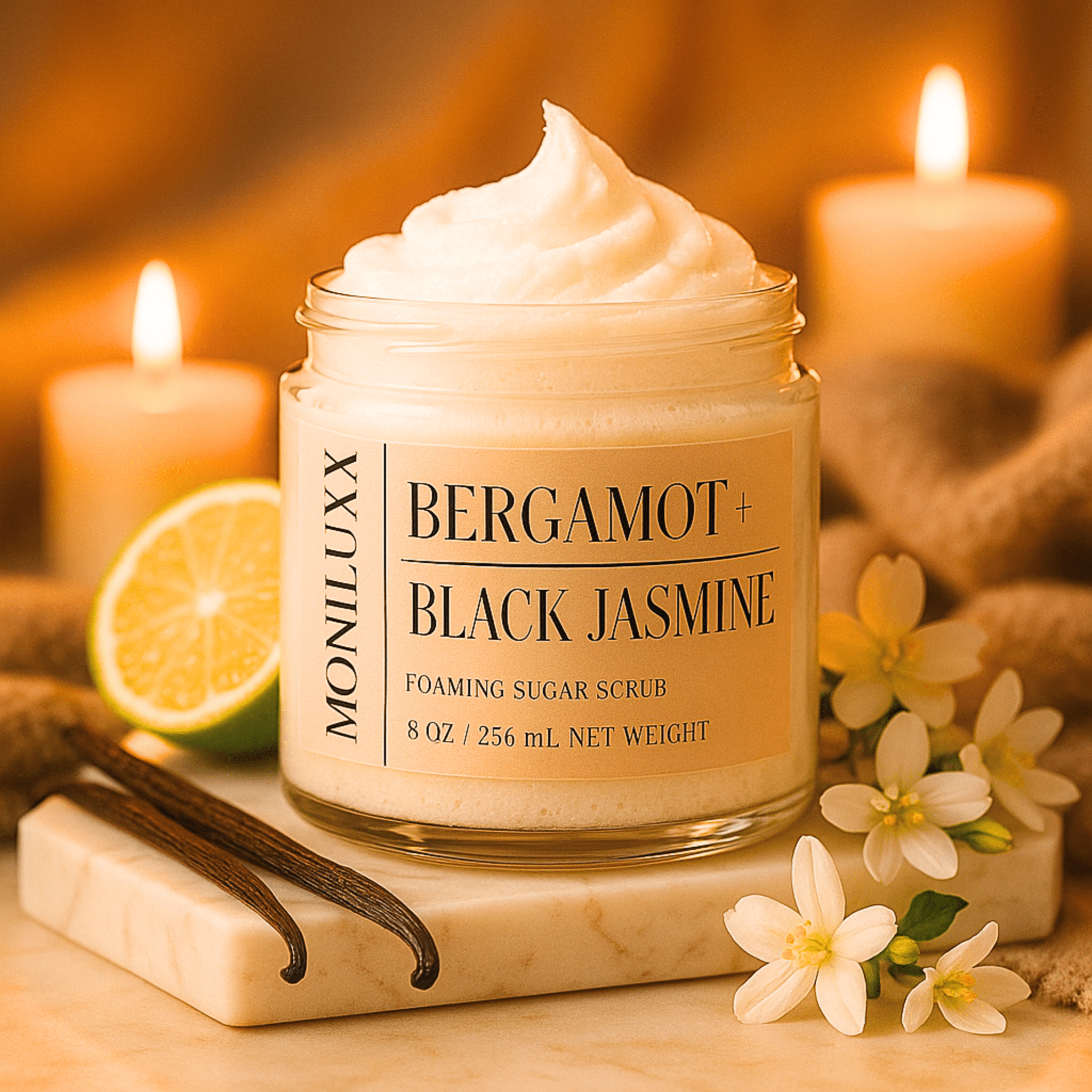
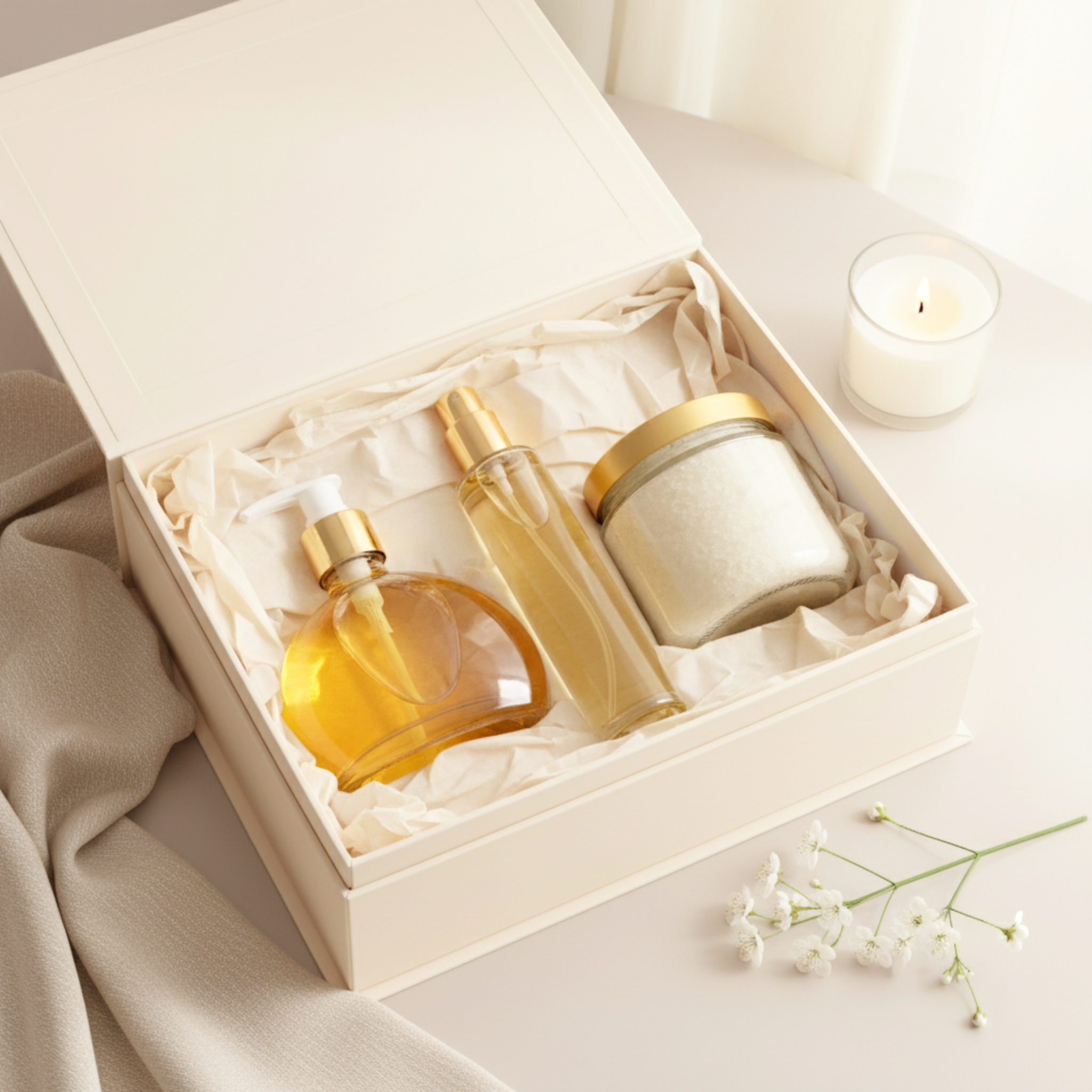
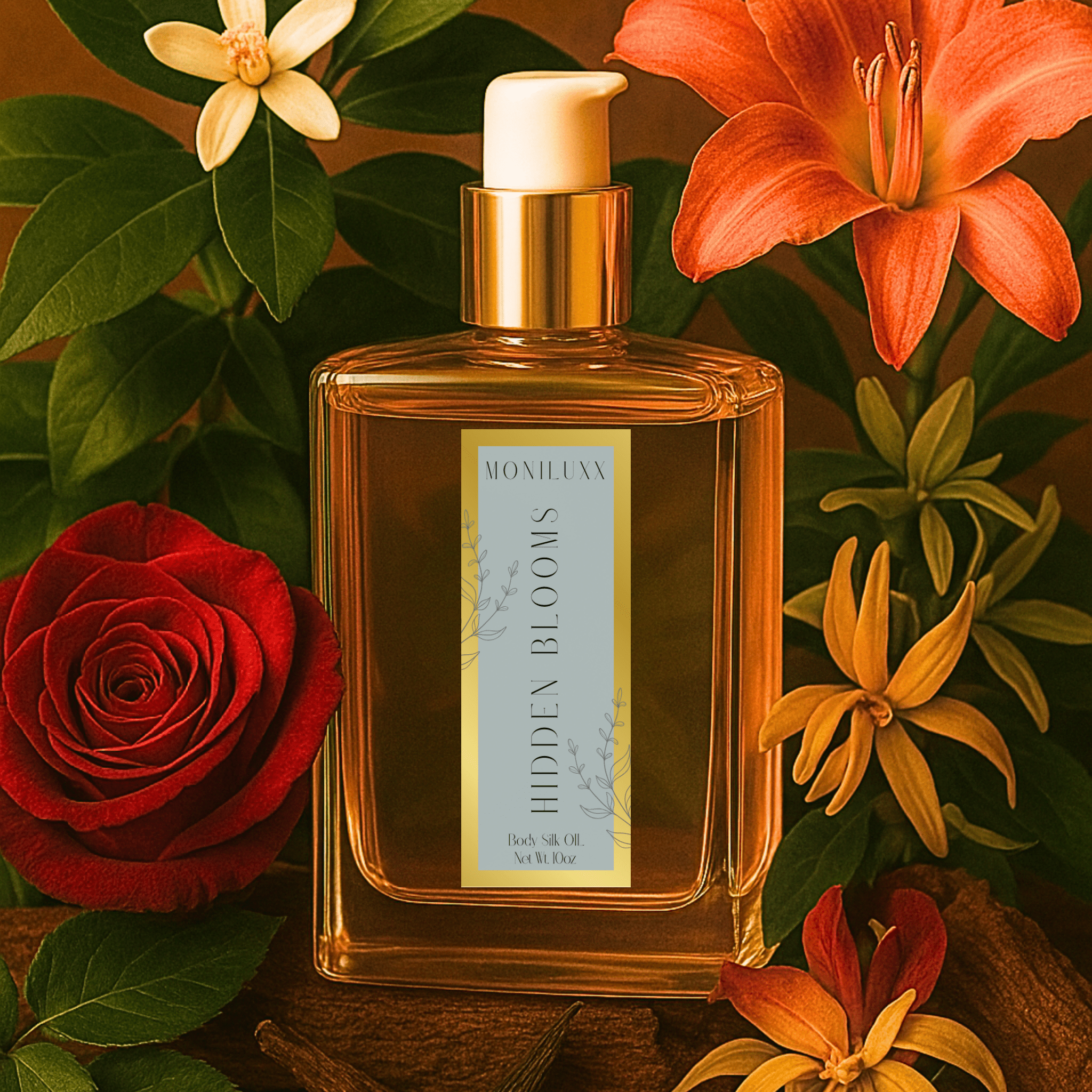
If you enjoy a scented ritual, you might explore our Bergamot & Black Jasmine foaming sugar scrub to see what a fragranced product looks like in practice. For a curated mix, the Self Care Ritual Box, where you choose your scent, lets you pick the fragrance you are comfortable with. Our Hidden Blooms Body Silk Oil is another option to browse once you know which scents you enjoy. If you are still weighing whether pricier body care is worth it, our clear, honest take on expensive skincare may help. And for a closer look at how we describe our favorites, read our honest review of five Moniluxx body silk oil favorites.
Reading labels takes a few extra seconds, but it helps you build a routine you can trust.
Frequently Asked Questions
How can you tell if a fragrance is synthetic?
The label is the most direct clue. A product that lists only the word fragrance or parfum rarely tells you whether the scent came from natural botanicals or synthetic compounds, because manufacturers are generally not required to name each component of a fragrance blend. Look instead for a full ingredient list that names specific plant extracts or essential oils, and be cautious of scent descriptions that sound natural while the list says otherwise. A sharp, one-note smell that lingers unusually long can also suggest a synthetic base, though smell alone is not a reliable test.
Can synthetic fragrance ingredients be hidden under the word fragrance on a label?
Yes. Many ingredients that give a product its scent can be grouped under the single term fragrance or parfum, which is why two products can list the same word yet smell and behave very differently. This is often called the fragrance loophole. To narrow it down, compare the full list for specific named ingredients, and when a brand is transparent about its sourcing, the company's own documentation will usually say more than the front of the bottle.
What does fragrance-free mean on a product label?
Fragrance-free generally means the product has no added scent ingredients, while unscented can mean a masking fragrance has been added to cancel out the natural smell of the base ingredients. The two terms are not interchangeable. If you are particularly sensitive, look for fragrance-free on the label and then read the ingredient list to confirm that no fragrance or parfum appears anywhere in it.
Where can synthetic fragrances hide in home and personal-care products?
They appear in more places than most people expect: body washes, lotions, deodorants, hair products, sunscreens, baby products, cleaning sprays, laundry detergents, candles, and air fresheners. Even items marketed as gentle or natural can contain a fragrance blend. A quick habit of scanning the ingredient list for the words fragrance or parfum across every category you buy will make these hidden additions much easier to spot.
