

What Are the Best Natural Ingredients for Glowing Skin?
Last Updated: October 25, 2026
Quick Summary
Glowing skin starts with hydration, so apply body oil or moisturizer within a few minutes of stepping out of the shower while skin is still damp. Oils high in linoleic acid and vitamin E, like jojoba, squalane, grapeseed, avocado and argan, seal in that moisture best.
- Apply body oil or moisturizer within a few minutes of showering, while skin is still damp.
- Keep showers warm rather than hot, since very hot water strips the skin's natural oils.
- Massage a few drops of oil onto damp skin after bathing to lock in hydration for hours.
- Start with a small amount of oil and add more only where skin still feels tight.
- Patch test new products on your inner arm first if your skin reacts easily.
Table of Contents
- Why Natural Ingredients for Glowing Skin Start With Hydration
- Natural Oils for Skin Hydration That Actually Seal in Moisture
- Natural Ingredients for Sensitive Skin: Soothing Botanicals That Calm
- Frequently Asked Questions
Why Natural Ingredients for Glowing Skin Start With Hydration
Glowing skin begins with water, not shimmer. When the skin's outer layer holds enough moisture, it looks plump, calm and lit from within. At Moniluxx, we build every body ritual around that idea, because natural ingredients for glowing skin work best when hydration comes first.
Most guides get this wrong: they list brightening ingredients as if a single botanical could transform dull skin overnight. Dehydrated skin looks tired and tight no matter how many plant extracts you layer on top. Rehydrate the surface, and those same ingredients perform the way the labels promise.
Hydration is the practice of helping skin hold water, and it is the foundation every other natural ingredient builds on. A sugar scrub used on damp skin in a warm shower lifts away the dry, dull layer so moisturizing ingredients can reach the skin beneath, which is why we love starting with something gently exfoliating, like our Vanilla Sandalwood Sugar Scrub, before sealing everything in with oil.
A few quiet habits carry most of the load:
- Apply body oil or moisturizer within a few minutes of stepping out of the shower, while skin is still damp
- Keep showers warm rather than hot, since very hot water strips the skin's natural oils
- Drink water steadily through the day instead of in one rushed glass
What most guides miss is that hydration is a daily rhythm, not a weekly treatment. Twenty seconds of oil on damp skin after every shower beats an hour-long ritual once a month.
Natural Oils for Skin Hydration That Actually Seal in Moisture
The best natural oils for skin hydration are high in linoleic acid and vitamin E, because they absorb quickly and reinforce the skin's own moisture barrier. Jojoba, squalane, grapeseed, avocado and argan are the ones we reach for most, and they are why a good body oil feels silky rather than greasy.
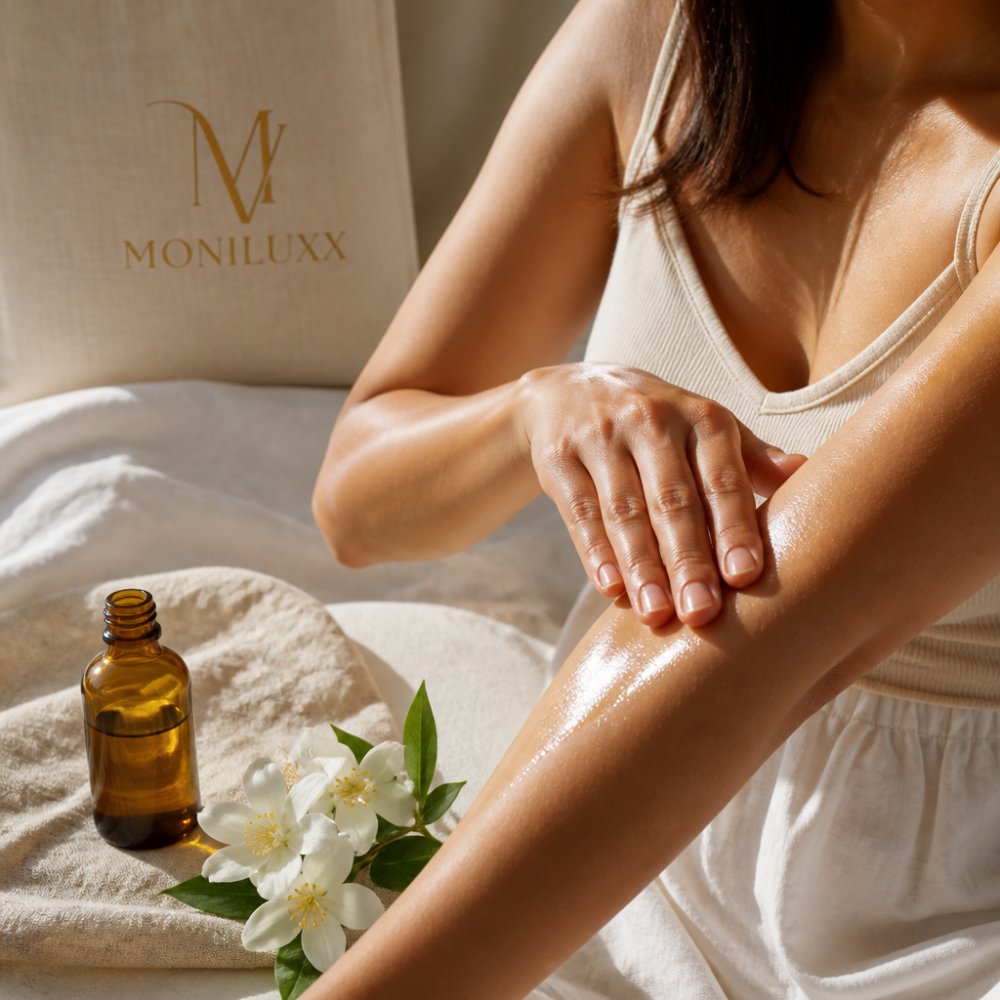
Close-up of a woman's hands massaging a golden body oil into her arm in soft morning light, amber glass bottle and a sprig of jasmine on a linen cloth nearby
Oils work by trapping water already in the skin, so timing matters more than quantity. Massage a few drops onto damp skin after bathing and you lock in hydration for hours; apply the same oil to dry skin and you mostly coat it. Our Bergamot+Black Jasmine Body Silk Oil blends sunflower, grapeseed, avocado, jojoba, apricot kernel and safflower oils with vitamin E, designed for exactly that damp-skin moment. Prefer something warmer? The Vanilla+Sandalwood Body Silk Oil brings argan, jojoba and squalane with a creamy vanilla-wood finish.
Bergamot+Black Jasmine Body Silk Oil →


A common mistake is over-applying. More oil does not mean more moisture, and too much leaves sheets and clothing tacky. Start small and add more only where skin still feels tight, usually elbows, knees and legs.
Here are the oils we reach for most, and why they earn their place in a body ritual.
Oil |
Why we love it |
How to use it |
|---|---|---|
Jojoba |
High in linoleic acid and vitamin E |
Massage a few drops onto damp skin |
Squalane |
Absorbs quickly, reinforces moisture barrier |
Few drops on damp skin after bathing |
Grapeseed |
High in linoleic acid and vitamin E |
Blend into body oil on damp skin |
Avocado |
High in linoleic acid and vitamin E |
Massage onto damp skin |
Argan |
High in linoleic acid and vitamin E |
Few drops on damp skin after bathing |
Natural Ingredients for Sensitive Skin: Soothing Botanicals That Calm
The most reliable natural ingredients for sensitive skin are the quiet ones: colloidal oat, aloe vera, calendula, chamomile and cucumber. They calm redness and replenish moisture without the sting strong actives can cause.
Fragrance is the most common trigger for irritation in bath and body products, so if your skin reacts easily, patch test anything new on your inner arm first. A product labelled natural can still contain essential oils that irritate you, so read the ingredient list rather than the front label.
For a soothing soak, our Bath Bomb - Night Jasmine is made with all-natural ingredients and nourishing essential oils that hydrate skin while you unwind. Warm water, low fragrance, short soak, then oil on damp skin, that is the whole formula.
Frequently Asked Questions
What are the best natural ingredients for glowing skin?
Start with plant oils rich in fatty acids and vitamins, such as jojoba, squalane, avocado, and argan oil. These support natural oils for skin hydration by helping skin hold moisture, which gives it a soft, lit-from-within look. Pair them with soothing botanicals like aloe and green tea if your skin is easily irritated. The key is consistency: applying a nourishing oil to damp skin after bathing does more for your glow than chasing a long list of trendy ingredients.
Which natural oils help keep skin hydrated?
Jojoba, squalane, avocado, grapeseed, and sunflower oils are reliable choices because they absorb well and are rich in essential fatty acids. Jojoba closely mirrors skin's own oils, while squalane adds lightweight cushioning without a heavy feel. For a body oil for dry skin, look for a blend of several plant oils rather than a single one, since the mix can hydrate and soften at the same time. Always apply to damp skin so the oil can lock in water.
How can I choose natural ingredients for sensitive skin?
Keep the formula short and skip anything with parabens or sulfates, which are common irritants. Patch-test a new oil on your inner arm for a day before using it all over. Fragrance can be the trickiest part, so if your skin reacts easily, start with an unscented or lightly scented oil and see how it feels. A small-batch body oil with a simple plant-oil base is often gentler than a mass-produced product with a long ingredient list.
Your skin does not need a ten-step routine. It needs water, a little plant oil, and a few quiet minutes that belong only to you. Moniluxx makes that easy with small-batch artisan soaps and nourishing body oils built on natural ingredients, formulated to seal in moisture and leave skin soft, calm and glowing. Browse the collection and turn an ordinary shower into a ritual you actually look forward to.
